The two Japan theme parks operated by the Oriental Land Company — Tokyo Disneyland and Tokyo DisneySea — are not just excellent; they are widely regarded by theme park enthusiasts and international travel writers as two of the finest entertainment destinations on the planet. But they are very different parks, and choosing which to visit first (or which to prioritize if you can only visit one) requires understanding what makes each unique.
This comprehensive 2026 guide compares both parks across every meaningful dimension: park design, attraction lineup, dining experience, ticket costs, crowd patterns, and suitability for different visitor types. Whether you are traveling with young children, a partner, a group of friends, or solo, this guide will help you decide which park to put first on your Japan itinerary.

Overview: Two Parks, Two Very Different Worlds
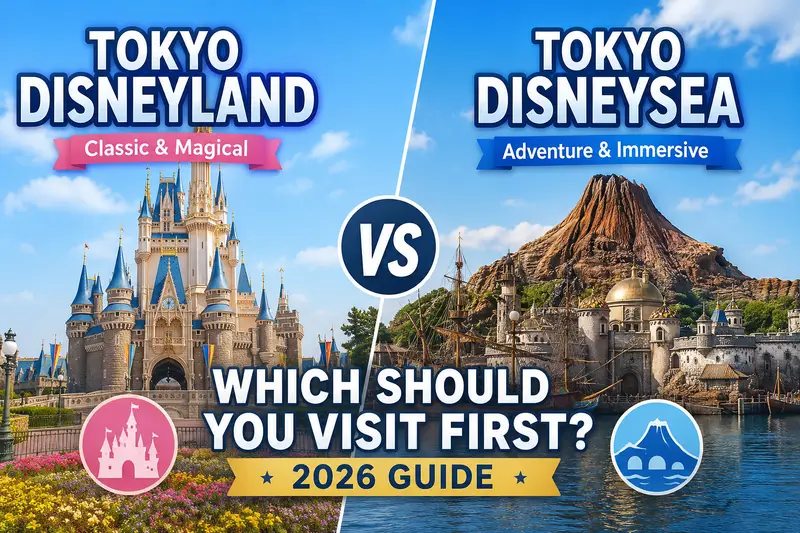
Tokyo Disneyland, which opened in 1983 as the first Disney theme park outside the United States, is a classic fairy-tale castle park built around the same fundamental layout as the original Disneyland parks — a central castle flanked by themed lands each representing a different universe of imagination and story. The park is family-centered, nostalgic in character, and organized around the emotional warmth of beloved storybook narratives.
Tokyo DisneySea, which opened in 2001 and has no direct equivalent anywhere else in the Disney global portfolio, is a radically different concept: a port-themed park built around a dramatic volcanic island called Mount Prometheus, with seven themed lands each inspired by a different region of the world and its associated legends of the sea. DisneySea is more architecturally ambitious, more adult in tone, more focused on stunning physical design, and widely considered by park enthusiasts to be the most beautifully designed theme park ever built.
- Tokyo Disneyland: Best for families with young children, first-time theme park visitors, and those who love the classic fairy-tale park experience
- Tokyo DisneySea: Best for adults, couples, theme park enthusiasts, architecture lovers, and those seeking a more sophisticated and immersive atmosphere
- Both parks: Exceptionally clean, impeccably run, and delivered with a level of hospitality (omotenashi) that exceeds any Disney park outside Japan
Tokyo Disneyland: The Classic Fairy-Tale Castle Experience
Tokyo Disneyland’s iconic Cinderella-style fairy-tale castle is the visual heart of the park and one of the most recognized structures in Japan. The park is organized into seven themed lands surrounding the central castle plaza: World Bazaar (the covered Victorian entrance street), Adventureland, Westernland, Fantasyland, Toontown, Tomorrowland, and the newest area, Fantasy Springs (opened 2024, shared with DisneySea — more on this below).
Must-Experience Attractions at Tokyo Disneyland
The park’s most popular and acclaimed attractions include:
- Haunted Mansion — The classic dark ride with 999 ghostly residents; the Tokyo version is considered among the finest in the global portfolio
- Big Thunder Mountain — The rollicking mine train roller coaster through a red-rock desert; consistently short waits in the first 30 minutes of park opening
- Space Mountain — The indoor roller coaster through a starfield; one of the original attractions from 1983 and still a crowd favorite
- Pirates of the Caribbean — The classic boat ride through a pirate port battle; extensively and lovingly maintained in its original 1983 form
- Pooh’s Hunny Hunt — Tokyo Disneyland’s most technologically advanced dark ride and arguably its most beloved; a trackless vehicle system through the storybook world of a famous bear that does not exist anywhere else in the global Disney portfolio
- Splash Mountain (now in transition for 2026 renovation — check current operating status before visiting)
Fantasyland and the Storybook Experience
Tokyo Disneyland’s Fantasyland is the most expansive and child-friendly area of the park, with a cluster of classic attractions based on beloved storybook and fairy-tale narratives — a dark ride through a magical flying elephant adventure, a teacup spinning ride, a carousel, and a gentle dark boat ride through a world of singing dolls. The entertainment production value throughout the land is exceptionally high, and the area is particularly magical in the evening when the castle is illuminated and during the nightly parade.
Tokyo DisneySea: The Most Beautiful Theme Park in the World
Tokyo DisneySea’s reputation among theme park enthusiasts is extraordinary. Built at a cost of approximately ¥335 billion (then roughly $3 billion USD), the park represents the largest single theme park investment in history at the time of its opening in 2001. Every themed land is a complete physical environment built with architectural authenticity and visual depth rarely seen in theme park design anywhere in the world.
The Seven Themed Ports of Call
DisneySea is organized around seven themed harbors:
- Mediterranean Harbor — The park entrance; a stunning recreation of a southern European port city with a gondola (gondola ferry service, ¥750 per person) and the dramatic backdrop of Mount Prometheus
- American Waterfront — 1920s New York and Cape Cod; home to Tower of Terror and the park’s flagship theatrical show
- Port Discovery — A futuristic harbor of oceanic exploration; home to Aquatopia (the park’s beloved unpredictable water vehicle ride)
- Lost River Delta — A Mexican jungle archeological expedition setting; home to Raging Spirits (a looping roller coaster, one of only two looping coasters in the Tokyo Disney Resort)
- Arabian Coast — A Middle Eastern fantasy based on the ancient tales of the sea; home to Sindbad’s Storybook Voyage (a gentle boat ride considered the park’s most atmospheric for adults)
- Mermaid Lagoon — An underwater world built inside an enormous indoor structure; designed primarily for younger children
- Mysterious Island — The volcanic core of the park at the base of Mount Prometheus; home to Journey to the Center of the Earth and the legendary 20,000 Leagues Under the Sea — both exclusive to Tokyo DisneySea
Must-Experience Attractions at Tokyo DisneySea
- Journey to the Center of the Earth — DisneySea’s signature attraction and perhaps the finest themed ride vehicle experience in the world; a high-speed escape through a volcanic underground world with extraordinary practical effects
- Tower of Terror (Tokyo version) — A completely different storyline and experience from any other global Tower of Terror; considered by many to be the finest dark ride in Japan
- Raging Spirits — The only looping roller coaster at Tokyo Disney Resort; an archeological-themed coaster in the Lost River Delta
- Sindbad’s Storybook Voyage — A gentle boat ride with extraordinary animatronics and a memorable original musical score; one of the most relaxing and emotionally resonant attractions in any theme park
- Indiana Jones Adventure: Temple of the Crystal Skull — The jeep-based adventure ride exclusive to Tokyo; slightly different theming from the Disneyland original
Fantasy Springs 2026: Tokyo’s Most Exciting New Theme Park Area
Fantasy Springs, which opened in June 2024 at Tokyo DisneySea as a major new expansion, is the most significant addition to the Tokyo Disney Resort in over two decades. The new area is themed around enchanted forests and magical spring water, with a cluster of new attractions based on beloved fairy-tale animated films including frozen mountain adventures, pirate island swashbuckling, and a magic forest exploration ride.
What Fantasy Springs Offers in 2026
- Three new attractions themed to animated stories about icy kingdoms, pirate adventure, and enchanted forests — offering a range of intensity from family-gentle to moderately thrilling
- Fantasy Springs Hotel — A premium new on-site hotel with rooms themed to the new area’s worlds; the most sought-after accommodation at the entire Tokyo Disney Resort (book 6+ months in advance)
- New dining and shopping themed to each of the three new story worlds, including highly Instagrammable menu items and themed merchandise exclusive to Fantasy Springs
- Standby queues for the most popular Fantasy Springs attractions can reach 150 to 200 minutes on busy days in 2026; the Disney Premier Access paid queue-skip system (¥2,000 to ¥2,500 per attraction per person) is strongly recommended for the headline rides
Full Comparison: Tokyo Disneyland vs Tokyo DisneySea
| Category | Tokyo Disneyland | Tokyo DisneySea | Winner |
|---|---|---|---|
| Best for families with young children | Excellent — gentle rides, classic fairy-tales | Good — Mermaid Lagoon area for kids | Disneyland |
| Best for adults and couples | Good — nostalgic atmosphere | Excellent — sophisticated atmosphere, alcohol served | DisneySea |
| Park design and theming quality | Very high | Extraordinary — best in the world by many measures | DisneySea |
| Thrill ride variety | Moderate — 2 roller coasters | High — 3 coasters plus unique dark rides | DisneySea |
| New content in 2026 (Fantasy Springs) | None currently planned | Fantasy Springs fully operational | DisneySea |
| Dining quality | Very good | Exceptional — multiple award-worthy themed restaurants | DisneySea |
| Alcohol availability | No (dry park) | Yes — beer and cocktails at multiple venues | DisneySea (for adult visitors) |
| Parade and nighttime spectacular | Excellent — iconic evening parade | Excellent — harbor-based water spectacular | Tie |
| Unique attractions not elsewhere in the world | 2–3 exclusives | 7–9 exclusives | DisneySea |
Ticket Prices and Purchasing Guide for 2026
Tokyo Disneyland and Tokyo DisneySea use a date-based dynamic pricing system introduced in 2023 that adjusts ticket prices by day of the week and time of year. There is no fixed single-day price — instead, tickets are categorized into five price tiers:
- Tier 1 (least expensive — quieter weekdays): ¥7,900 per adult
- Tier 2: ¥8,400 per adult
- Tier 3: ¥8,900 per adult
- Tier 4: ¥9,400 per adult
- Tier 5 (most expensive — peak season, holidays): ¥10,900 per adult
Children aged 4–11 pay ¥4,700–¥6,400; children under 4 are free. Ticket price does not change depending on which park you visit — the same price tiers apply to both Tokyo Disneyland and Tokyo DisneySea. A 2-Park Annual Passport is available for ¥133,000 per adult for unlimited visits to both parks for one year (excluding blackout dates).
Disney Premier Access (Queue-Skip System)
The Premier Access paid queue-skip system allows guests to skip the standby line for specific popular attractions by purchasing a timed entry ticket for that attraction (¥1,500 to ¥2,500 per attraction per person, purchased through the Tokyo Disney Resort app). In 2026, Premier Access is strongly recommended for Fantasy Springs attractions at DisneySea and for the most popular Disneyland attractions (Pooh’s Hunny Hunt, Space Mountain) on busy days. Budget an additional ¥3,000 to ¥7,500 per person if you plan to use Premier Access for multiple attractions.
Best Time to Visit Tokyo Disney Parks in 2026
Crowd levels at Tokyo Disney Resort follow predictable seasonal patterns. The quietest periods — offering the shortest queues and most enjoyable park experience — are:
- Weekdays in January, February, and early March (excluding the Chinese New Year long weekend and Valentine’s Day): the absolute quietest period of the year, with standby waits for most attractions under 30 minutes
- Weekdays in mid-May through mid-June (the rainy season slightly deters domestic visitors): good availability and relatively short queues despite reasonable weather
- Weekdays in September and October (post-summer, before autumn school trips): generally manageable crowds with excellent weather
The busiest and most crowded periods to avoid if possible are: Golden Week (late April to early May), summer school holidays (mid-July to late August), autumn school trip season (late October to mid-November), and New Year’s holidays (late December to early January). On the busiest days of the year, popular attraction standby queues can reach 200 minutes or more, and park entry may temporarily pause due to capacity.
Access to Tokyo Disney Resort from Tokyo City
Both parks are located side by side in Urayasu, Chiba Prefecture, approximately 15 kilometers east of central Tokyo. Access is straightforward by train from multiple central Tokyo stations:
- From Tokyo Station: JR Keiyo Line direct to Maihama Station (15 minutes, ¥220); the parks are a 5-minute walk or free park bus ride from Maihama Station
- From Shinjuku or Shibuya: Tokyo Metro or JR to Shin-Kiba then Keiyo Line to Maihama (approximately 45–60 minutes, ¥330–¥410)
- From Haneda Airport: Airport shuttle bus direct to Tokyo Disney Resort (approximately 30–40 minutes, ¥950 one way); or Tokyo Monorail to Hamamatsucho then JR Keiyo Line (about 45 minutes total)
- From Narita Airport: Airport limousine bus direct to Tokyo Disney Resort (approximately 65 minutes in non-peak traffic, ¥2,500 one way) — most convenient option with luggage
The Disney Resort Line monorail (¥260 per ride) connects Maihama Station with the two park gates and the on-site Disney hotels in a continuous loop, making navigation around the resort simple.
Insider Tips for Getting the Most from Tokyo Disney Parks in 2026
- Download the Tokyo Disney Resort app before arriving in Japan. The official app (available in English) is essential for purchasing Premier Access queue-skip tickets, monitoring real-time standby wait times, viewing park maps, making restaurant reservations, and checking entertainment schedules. Set up your account and link your park tickets before the day of your visit.
- Arrive at the park gate at least 30 minutes before official opening. Both parks allow entry to the entrance areas (World Bazaar at Disneyland; Mediterranean Harbor at DisneySea) before the official opening time. When the park officially opens, guests in this waiting area can surge to popular attractions first.
- The DisneySea dining advantage: Unlike Tokyo Disneyland, Tokyo DisneySea serves alcohol throughout the park — beer, wine, cocktails, and sake. The Magellan’s full-service restaurant in Mediterranean Harbor and Yucatan Base Camp Grill in Lost River Delta are particularly outstanding for adult dining. Make reservations for table-service restaurants at 60 days in advance through the app.
- Best time to visit Fantasy Springs: The first 30 minutes of park opening and the final 90 minutes before close are the two windows when Fantasy Springs queues are shortest. Midday waits can be 2 to 3 times longer.
- On-site hotel guests get early park entry: Guests staying at official Tokyo Disney Resort hotels receive 15-minute early park access before the general public. During busy periods this head start can make the difference in accessing Fantasy Springs with a 30-minute wait versus a 180-minute wait.
- Weather consideration: Both parks operate rain or shine, and the crowds actually thin somewhat on light-rain weekdays. Bring a compact umbrella and waterproof layer; the parks experience all four seasons and summer can be extremely hot and humid.
For accommodation near the parks, see our complete planning guide: Perfect 2-Week Japan Itinerary for First-Timers — which includes how to fit a Disney day into a broader Japan trip.
Frequently Asked Questions About Tokyo Disney Parks in 2026
- Which park should I visit first — Tokyo Disneyland or Tokyo DisneySea?
- For most international visitors, especially those visiting for the first time: visit Tokyo DisneySea first. It is the park that is unique to Japan and exists nowhere else in the world. If you have limited time in Japan and can only visit one park, DisneySea is the one that will offer an experience genuinely unavailable anywhere else on the planet. Visit Disneyland second if you have a second day — it provides the classic fairy-tale castle experience that is more familiar to those who have visited Disney parks in the United States or Europe, but with the exceptional Japanese hospitality standard that makes all Tokyo Disney experiences distinctive.
- How much should I budget per person for a full day at one Tokyo Disney park in 2026?
- A realistic budget for one person for one full day at either park in 2026:
Entry ticket: ¥7,900 to ¥10,900 depending on date
Disney Premier Access (2–3 attractions): ¥3,000 to ¥7,500
Food and drinks (3 meals/snacks): ¥3,500 to ¥7,000
Merchandise and souvenirs: ¥3,000 to ¥20,000+ (highly variable)
Transport to/from park: ¥440 to ¥5,000 depending on origin
Total realistic range: ¥20,000 to ¥45,000 per person per day - Is Fantasy Springs at DisneySea worth visiting in 2026?
- Yes, emphatically — but manage your expectations for wait times. Fantasy Springs represents a genuinely major expansion that adds significant new content and atmospheric richness to DisneySea. The three new attractions range from family-gentle to moderately exciting, the new themed dining and retail areas are beautifully executed, and the overall atmosphere of the new land is distinctive and immersive. The key challenge in 2026 is crowd management: Fantasy Springs is still in its post-opening honeymoon period and attracts the longest standby queues in the entire resort. Plan to use Premier Access for at least one Fantasy Springs attraction, arrive at park opening, and prioritize the area early in your day.
- Can I visit both Tokyo Disney parks in one day?
- Technically yes — through the park-hopper system: purchase a 1-Day Passport for the first park and switch to the second park after 3 p.m. for an additional ¥600 (the park-hopping fee). However, a single day split between two parks is genuinely rushed for both. We strongly recommend allocating one full day to each park. Both parks are large enough (and reward slow exploration enough) that half a day at each leaves you feeling you have barely scratched the surface. If you must combine both parks in one day, prioritize the morning in DisneySea (arriving at opening for Fantasy Springs) and switch to Disneyland in the late afternoon for the evening parade and fireworks.
- Are there any attractions at Tokyo Disney exclusive to Japan that don’t exist anywhere else?
- Yes — this is one of the most compelling reasons for theme park enthusiasts to visit the Tokyo parks specifically. Exclusive-to-Japan attractions include: Pooh’s Hunny Hunt at Disneyland (trackless vehicles through a storybook world — no version of this exists anywhere in the global portfolio); Journey to the Center of the Earth at DisneySea; Tower of Terror (Tokyo version) at DisneySea (completely different storyline and effects from the American versions); Sindbad’s Storybook Voyage at DisneySea; and 20,000 Leagues Under the Sea at DisneySea. The Fantasy Springs attractions are also currently Tokyo exclusives.
Verdict: Tokyo Disneyland vs DisneySea — The Final Recommendation
For planning your complete Japan trip that includes a visit to the Tokyo Disney Resort, see: Perfect 2-Week Japan Itinerary for First-Timers | 10 Magical Places in Japan That Feel Like a Fairytale.