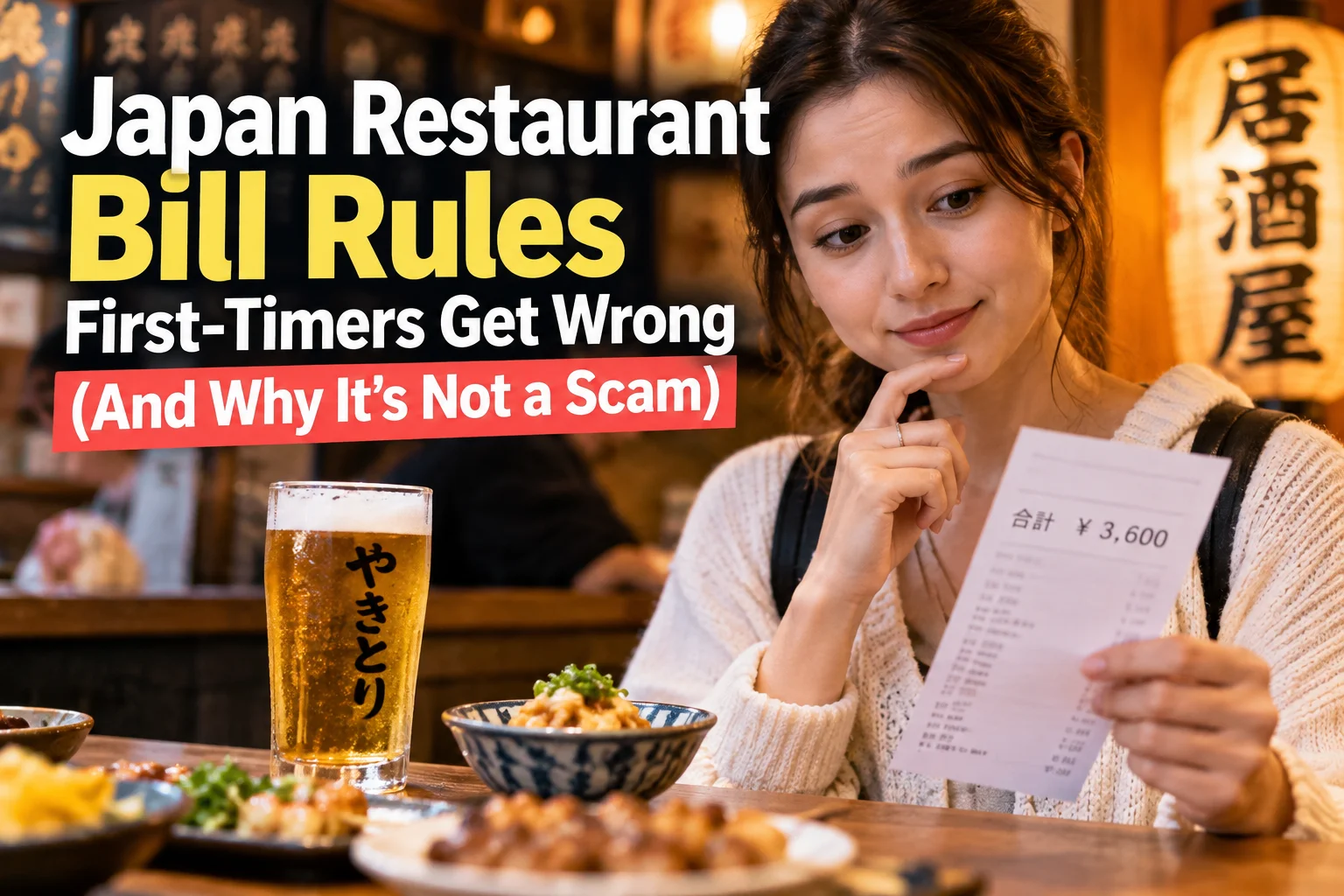
A group of six tourists at a Tokyo izakaya once refused to pay a ¥3,600 charge for food they never ordered, convinced they were being scammed. Staff scrambled for a translation app. A manager had to step in.
They weren’t being scammed. They just didn’t know about the rule almost every first-timer discovers the hard way — usually at the worst possible moment, with the bill already in hand.
⭐ Bottom Line
The mystery charge on a Japan restaurant bill is almost always otoshi — a ¥300 to ¥800 per-person seating charge that comes with actual food, not a scam or a tourist tax.
- Best for: Anyone eating at an izakaya, casual bar, or sit-down restaurant for the first time in Japan
- Budget: Expect an extra ¥300–¥800 per person, per visit, beyond what you ordered
- Book ahead: Nothing to book — just bring cash and read this before your first dinner
If you’ve ever looked at a Japan restaurant receipt and found a charge you don’t remember agreeing to, you’re not imagining it, and you almost certainly weren’t cheated. In one widely reported 2026 incident, a group of tourists at a Tokyo izakaya erupted over exactly this — a ¥3,600 total for a small appetizer dish nobody remembered ordering. The charge was real, standard, and completely legal.
This happens often enough that the Okinawa Convention & Visitors Bureau, a bilingual tourism support organization, fields regular calls from confused visitors and frustrated restaurant owners trying to explain the concept across a language barrier. It’s not rare. It’s just never explained before you sit down.
Picture your own first night at an izakaya: you sit down, a drink arrives, and — before you’ve even opened the menu — a small dish shows up that you didn’t ask for. That’s the moment this article exists for. Here’s exactly how paying a restaurant bill in Japan works, the specific charges that catch first-timers off guard, and how to handle all of it without an awkward scene.
The Charge on Your Bill You Didn’t Order

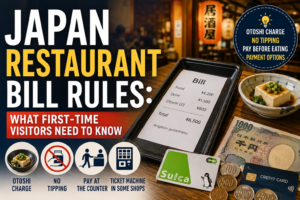
Shortly after you sit down at an izakaya — often before your first drink even arrives — a small dish appears that you didn’t ask for: pickled vegetables, a few pieces of simmered fish, edamame, a small salad. This is otoshi (お通し), called tsukidashi in the Kansai region. It functions as a seating charge dressed up as food, and it’s added to your bill automatically, typically running ¥300 to ¥800 per person, occasionally up to ¥1,000 at upscale bars.
It exists largely because tipping isn’t practiced in Japan — otoshi is how izakaya recoup the cost of seating and serving a table that might nurse one drink for two hours. It’s billed per person, not per table, and in the 2026 incident above, the total doubled because the group ordered a second round and staff treated it as a new seating cycle.
Once you know what it is, otoshi stops being a source of anxiety and starts being one of the small pleasures of an izakaya night — a little unannounced dish, often reflecting what the kitchen is proud of that evening, arriving before you’ve even said what you want to drink.
You’ll still pay for it either way, so you might as well enjoy it.
Some chains, including Torikizoku, Kin no Kura, and select Watami locations, advertise otoshi nashi (no otoshi) specifically to attract diners who’d rather skip it. If you’d genuinely prefer not to pay it, you can ask before being seated — but doing so after the dish has already landed on your table is considered poor form and won’t get it removed from the bill.
Do You Need to Speak Japanese to Pay?
No — and this is usually the first worry first-timers have, right after wondering if they’ve been overcharged. Most restaurants that see any tourist traffic have staff who can manage basic English for the payment process, and the process itself is visual enough to follow without much language at all: you’ll be handed or shown a slip, or a total will appear on a register screen you can see. Pointing at the number and nodding works.
Payment at most restaurants happens at a register near the exit, not at your table — a common first-timer mix-up is waiting at the table for a check the way you might in the US. If no one comes to collect payment after a meal, that’s usually the cue to head to the front register yourself, not a sign you’ve been forgotten.
Cash, Card, or Ticket Machine — Knowing Which One You’re Walking Into
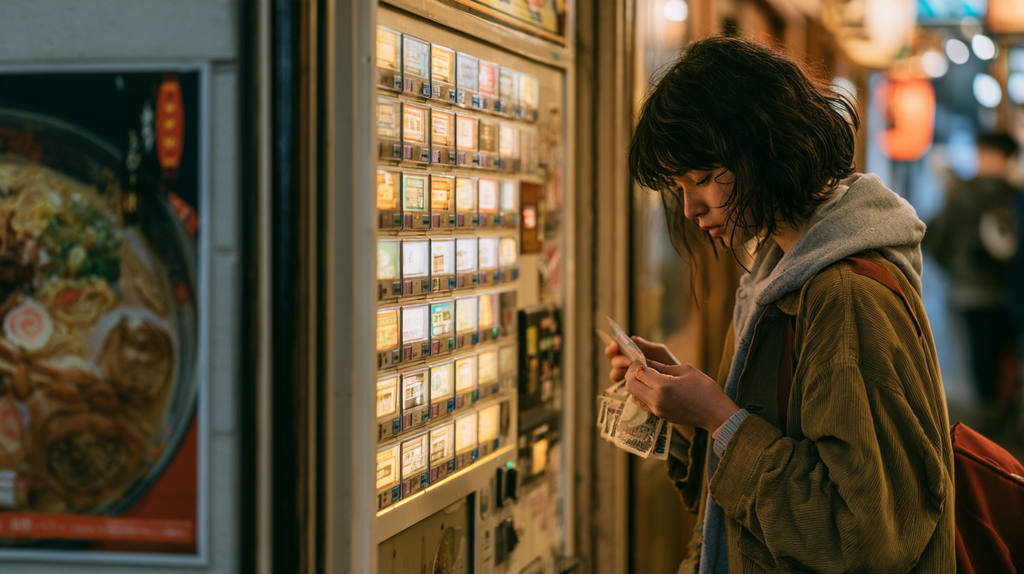
Japan has three genuinely different restaurant payment systems, and knowing which one you’re facing before you sit down saves real confusion:
| Restaurant Type | How You Pay | Otoshi / Service Charge? | Typical Price Range |
|---|---|---|---|
| Ramen shop / fast casual chain | Ticket machine (shokkenki) at entrance, before you sit | No otoshi; price is fixed on the ticket | ¥800–¥1,200 per person |
| Izakaya | Register near exit, after your meal | Yes — otoshi, ¥300–¥800 per person | ¥2,500–¥4,500 per person with drinks |
| Family restaurant / casual dining | Register near exit, sometimes tableside card reader | Rare; check the menu footer | ¥1,000–¥2,500 per person |
| Fine dining / private room | Register or tableside, often pre-arranged | Often a 10–15% service charge, stated on the menu | ¥8,000+ per person |
Japan’s Ministry of Economy, Trade and Industry reported in March 2026 that 58% of consumer spending nationwide is now cashless — but Japan Tourism Agency inbound-survey data found 94.5% of visiting tourists still used cash at some point on their trip. The gap exists because many small restaurants that accept Japanese mobile payment apps like PayPay still can’t process a foreign-issued credit card, and ramen-shop ticket machines in particular are notorious for not accepting large bills or any card at all.
Tipping, Refusing Change, and Other Ways to Accidentally Cause a Scene
Tipping is not practiced at restaurants, bars, or izakaya anywhere in Japan, and it’s not simply “not expected” the way it might be in parts of Europe — leaving extra cash on the table can actively fluster staff, some of whom have chased departing customers down the street to return money they assumed was left behind by mistake. If you want to show appreciation, a sincere gochisousama deshita (“thank you for the meal”) on your way out does more than a tip would.
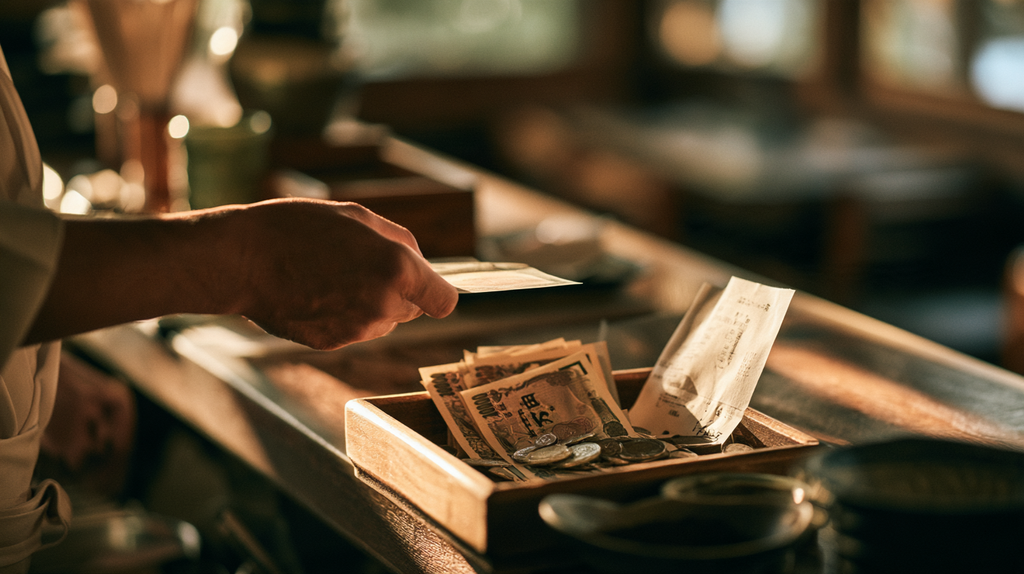
When you do pay, cash usually goes into a small tray at the register rather than directly into the cashier’s hand, and change comes back the same way. It’s not a rule you’ll be corrected on if you get it wrong, but it’s one of the small tells of someone who’s paid attention.
Splitting the Bill, Late-Night Surcharges, and Other Fine Print
Splitting a bill evenly among a group — called warikan — is the cultural default in Japan, even when people ordered noticeably different amounts. Asking a restaurant to split a bill into separate individual checks is possible at some casual chains but often isn’t at izakaya or smaller restaurants, especially during a busy dinner service, so it’s worth deciding how you’ll divide costs before you’re standing at the register with a line behind you.
A few chains, including major gyudon (beef bowl) restaurants, have introduced a documented 7% late-night surcharge for orders placed between roughly 10 PM and 5 AM, a change several chains rolled out between 2024 and 2026 to offset rising costs during overnight hours. Separately, fine-dining restaurants and private dining rooms commonly add a stated 10–15% service charge on top of the standard 10% consumption tax — this is disclosed on the menu in advance, unlike otoshi, and functions closer to a mandatory gratuity than a surprise fee.
Your First Restaurant Bill, Step by Step
Walking through an actual meal removes most of the guesswork:
- Check the door or menu for a card sticker. No sticker generally means cash only.
- If there’s a ticket machine at the entrance, order and pay there first — you’ll hand the ticket to staff once seated.
- At an izakaya, expect a small unordered dish shortly after sitting down. That’s otoshi; it will appear on your final bill.
- When you’re ready to leave, head to the register near the exit — don’t wait at the table for someone to bring a check.
- Place cash or your card in the small tray on the counter, rather than handing it directly to the cashier.
- Don’t leave a tip. A verbal thank-you on the way out is the appropriate gesture.
✅ You’ll Breeze Through This If You:
- Carry ¥3,000–¥5,000 in cash per person for smaller restaurants
- Expect a small automatic dish and charge at any izakaya
- Head to the register yourself when you’re ready to pay
- Skip the tip and say thank you instead
❌ You’re More Likely to Get Caught Off Guard If You:
- Assume every restaurant takes foreign credit cards
- Wait at your table expecting a server to bring the check
- Try to refuse or argue about otoshi after it’s already on the table
- Leave cash behind as a tip, assuming it will be appreciated
- Do I need to speak Japanese to pay at a restaurant in Japan?
- No. Most restaurants with any tourist traffic can handle payment with minimal English, and the process is visual enough — a receipt, a register total, a tray for cash — that you can follow along without much language at all.
- Is the otoshi charge a scam targeting tourists?
- No. It’s a long-standing, legal Japanese restaurant custom applied to every customer, tourist or local, at the vast majority of izakaya. It functions as a seating charge that comes with a small dish of food, in place of the tipping culture Japan doesn’t use.
- Can I refuse the otoshi dish and get it removed from my bill?
- Only if you ask before being seated at restaurants that allow it. Once the dish has been placed on your table, it’s considered accepted, and asking for it to be removed afterward is both unlikely to work and seen as poor etiquette.
- Should I tip at restaurants in Japan?
- No. Tipping isn’t practiced and can genuinely fluster staff — some have chased down customers to return money left as a tip. A verbal thank-you on your way out is the appropriate way to show appreciation instead.
- Why do some Japanese restaurants only accept cash?
- Card processing fees are a real cost for restaurants operating on thin margins, particularly ramen shops and small izakaya, so many remain cash-only or accept only Japanese mobile payment apps that require a local phone number. Government data shows most tourists still end up using cash at some point during their trip for exactly this reason.
Related Guides
- Omakase Sushi in Tokyo 2026: The Complete Beginner’s Guide (With Real Prices & Where to Book)
- Kobe Beef vs Wagyu: The $300 Mistake Tourists Make in Japan
- 10 Foods You Have to Eat in Japan That Have No English Name (And Where to Find Them)
- I Spent $4,000 on My Japan Trip and Wasted $1,200. Here’s Every Mistake I Made
- Capsule Hotels in Japan: A First-Timer’s Guide to What Actually Happens Inside