A Tokyo izakaya once made headlines when a group of six tourists erupted — “No! No! Crazy!” — over a ¥3,600 charge on their bill.
They weren’t being scammed. The truth is almost funnier than the accusation.
⭐ Bottom Line
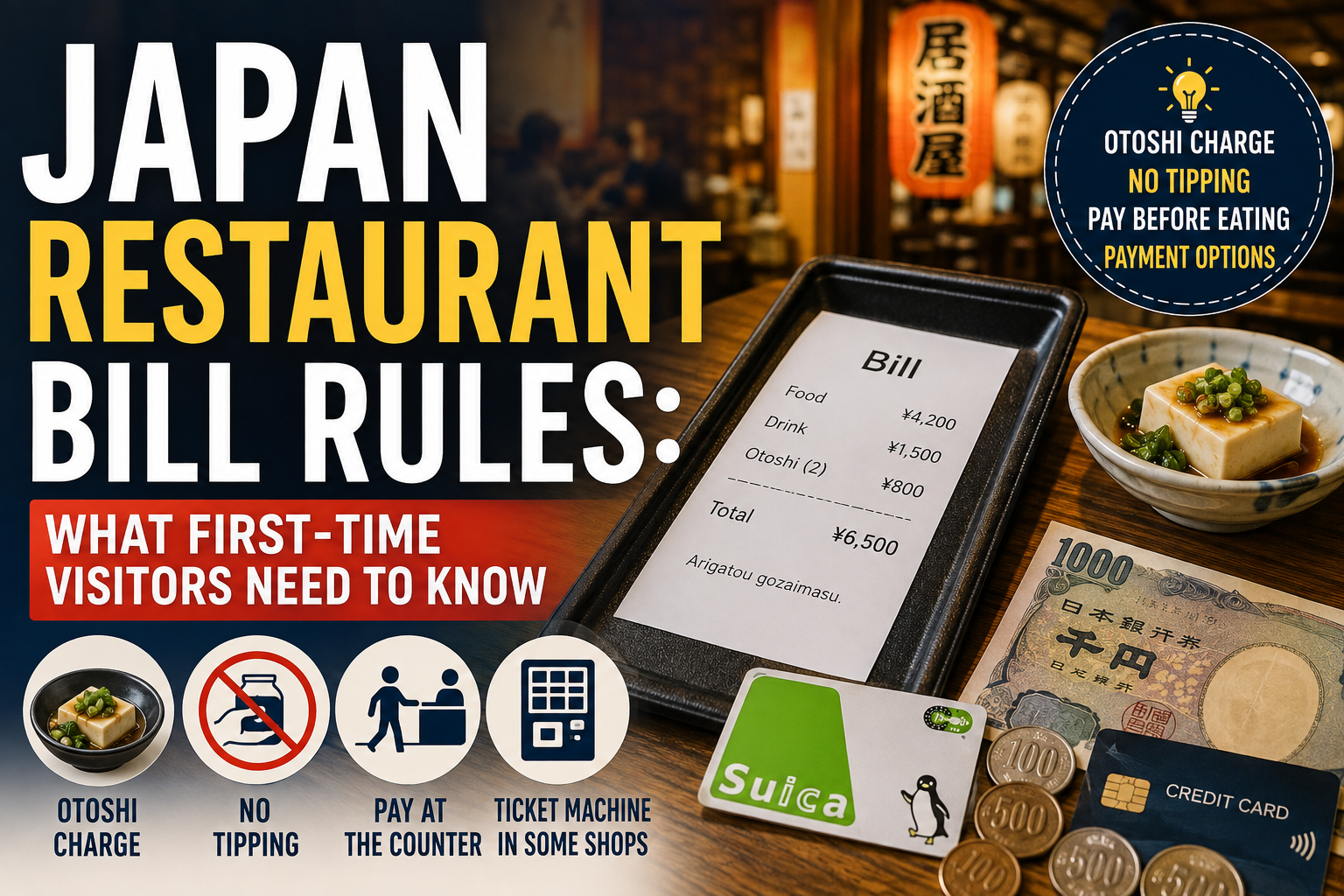
That charge is called otoshi — a small automatic starter that costs ¥300–800 (about $2–$5) per person at most izakaya. It isn’t a scam, and every Japanese customer at the next table is paying it too.
- Best for: first-time visitors nervous about restaurant etiquette in Japan
- Budget: ¥300–800 otoshi per person; no tip expected at ordinary restaurants
- Book ahead: reservations help for popular dinner spots; ticket-machine and ramen shops are walk-in by design
Paying for a meal in Japan trips up more first-time visitors than almost any other single moment of the trip — not because the food is confusing, but because the payment mechanics look nothing like home. A dish shows up that nobody ordered. The bill has no line for a tip. Some restaurants don’t have a cashier in the usual sense at all — they have a vending machine near the door instead.
None of it is a trap, and none of it requires fluent Japanese. The short answer to “how does paying for a meal in Japan actually work”: expect a small automatic charge at most izakaya, don’t plan on tipping, and follow visual cues — a machine, a register, a tray — rather than waiting for a server to bring a check the way they would back home. The rest of this guide walks through exactly what to expect, starting with the charge that confuses first-timers most.
1. You Got Charged for Food You Never Ordered
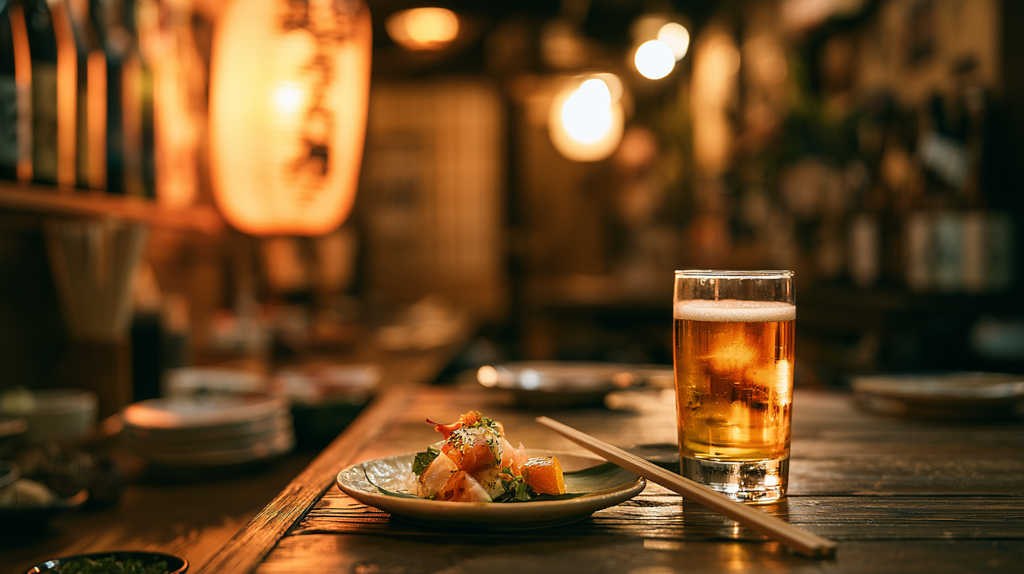
Sit down at most izakaya (Japanese pubs) and within a few minutes, a small dish appears — pickled vegetables, a few pieces of tofu, a handful of edamame. Nobody asks if you want it. It just arrives, and it shows up on the bill later as otoshi (sometimes called tsukidashi in western Japan), typically ¥300–800 per person, occasionally more at upscale spots.
It functions as a table charge or cover charge rather than a free appetizer — the closest Western equivalent is a cover charge at a bar, bundled with a small snack. At most izakaya it applies to every customer, including regulars who’ve been drinking at the same counter for years, and you generally shouldn’t assume it’s declinable once it’s already on the table — though policies vary by shop, and some tourist-friendly spots will waive it if you ask politely before ordering.

Most guides stop at “just accept it.” Here’s the part that actually explains why leaving a tip on top of it can make things worse, not better.
2. The Language Question: Do You Need Japanese to Pay a Bill?
No. This is worth settling early, because the anxiety around restaurant bills in Japan is almost always bigger than the actual difficulty. Newer ticket machines increasingly offer English or picture-based menus, table-service restaurants increasingly hand over a bill with the total printed in numerals you can already read, and pointing at a total on a register screen works everywhere — though older, independent-shop machines can still be Japanese-only.
Once the language worry is off the table, the next surprise is about the bill itself — specifically, what’s missing from it.
3. Why There’s No Tip Line — And Why Leaving One Backfires
There is no tipping culture in Japan, at restaurants, taxis, or hotels. The price printed on the menu is the price you pay — good service is treated as the baseline of the job, not something purchased on top of it. Leave coins or notes on the table when you leave, and it’s common for staff to chase you down the street to return what they assume you forgot.
The one place this shifts slightly: some high-end Western-style hotels and upscale restaurants add a disclosed service charge, often around 10–15%, directly to the bill. That’s not a tip either — it’s a stated fee printed on the check, so check the menu or bill rather than assuming it applies everywhere.

Picture the moment the anxiety actually lifts: the otoshi arrives, you eat it without a second thought, the bill comes without a tip line to agonize over, and you pay the exact number on the screen — done.
It takes exactly one meal to stop feeling foreign about any of this.
4. Nobody Is Bringing You the Check
Finish a meal at a casual Japanese restaurant and the habit that trips up most first-timers is simple: they wait. No one comes. In many casual restaurants, payment happens at a register near the exit rather than at the table — but restaurants vary, so follow the bill, the staff, or any signage rather than assuming every place works the same way. Some hand you a printed slip to carry to the register; others use tableside tablets or QR codes instead.
Paying at a register instead of the table is one surprise. Some restaurants take it a step further and skip the ordering conversation entirely.
5. You’re Supposed to Pay Before You Eat
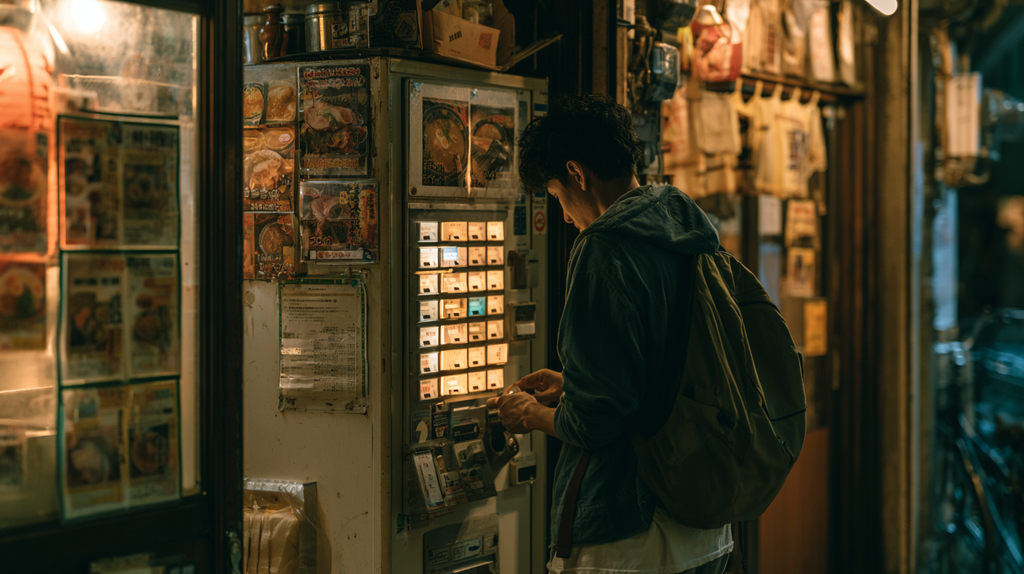
At many ramen, soba, and curry shops, there’s no waiter taking your order at all. Instead, a shokken (food ticket) vending machine sits near the entrance. You select and pay for your meal there first, a printed ticket comes out, and you hand that ticket to the kitchen staff once you’re seated — payment happens before the food does, not after.
Ticket machines are common enough that you’ll encounter them regularly at this style of restaurant. Older machines use physical buttons with photos; newer ones increasingly use touchscreens with English or picture-based menus, though older Japanese-only machines are still out there. Many still take cash only, so keep ¥1,000 notes and coins on hand specifically for ramen-style shops.

Ticket machines cover how you pay before eating. The next question is what actually works once you’re at a register.
6. Cash, Card, or IC Card: What Actually Works for Visitors
Japan has shifted further toward cashless payment since the pandemic, but the shift is uneven. Major chains, department stores, hotels, and most sit-down restaurants in cities now take Visa and Mastercard without issue. Small, independent restaurants — an eight-seat ramen counter, a neighborhood izakaya with a handwritten menu — are often still cash-only, with no card reader in sight.
QR-code payment is everywhere locally — PayPay above all — but it’s genuinely awkward for short-term visitors to set up: registering typically requires a Japanese phone number, and some services also expect a Japanese bank account. Unless you already have a Japan-issued SIM, don’t count on QR payment as your backup plan.
One more habit worth adopting: if there’s a small tray near the register, use it for cash or card rather than handing it directly to the cashier. If there isn’t one, just follow the cashier’s lead — hand-to-hand payment is common too.
7. The Restaurant Won’t Split the Bill Six Ways
Itemized bill-splitting the way it’s done with a Western group check — separating exactly who ordered what — is rare in Japan and can visibly slow down a busy restaurant. The far more common approach, called warikan, is to divide the total evenly across the group, or for one person to pay the full bill at the register and get reimbursed by the others afterward, often via a payment app once everyone’s back at the hotel.
With ordering, payment, tipping, and splitting all covered, here’s how the whole sequence looks laid out in order for your very first restaurant bill.
Your First Restaurant Bill, Step by Step
Walk through an average dinner and the payment sequence looks like this, start to finish:
Follow that sequence once, and every restaurant bill after it in Japan starts to feel like second nature.
✅ You’re Ready If:
- you know otoshi isn’t something you can casually decline once it’s served
- you’ve mentally deleted “leave a tip” from your routine entirely
- you can spot a ticket machine near an entrance and aren’t afraid to press buttons
- you’re carrying both cash and a card, just in case
❌ Slow Down and Double-Check If:
- you’re heading to a tiny, cash-only ramen counter with no card reader in sight
- you’re in a large group hoping to split an itemized bill six ways at a busy izakaya
- you’re at a hotel or upscale restaurant and haven’t checked whether a service charge is already included
- you’re about to leave coins on the table “just in case” — don’t
| Restaurant Type | How You Order | How You Pay | Extra Charges |
|---|---|---|---|
| Ramen / ticket-machine shop | Vending machine near entrance | Pay before sitting, mostly cash | None typical |
| Izakaya (pub-style) | Waitstaff, table or counter | Register near exit | Otoshi, ¥300–800/person |
| Sit-down table-service restaurant | Waitstaff with menu | Register near exit, sometimes tableside | None typical |
| High-end / Western-style hotel restaurant | Full table service | Tableside or register | Often a disclosed 10–15% service charge — check the bill |
Frequently Asked Questions
- Do I need to speak Japanese to pay for a meal in Japan?
- No. Ticket machines increasingly offer English, most bills show a printed total in numerals, and pointing at a screen or using a phone calculator covers almost any cash-only shop without English signage.
- Is otoshi a scam targeting tourists?
- No. It’s a long-standing custom applied to every customer, Japanese or foreign, and it typically costs ¥300–800 per person. It feels like a scam mainly because it’s rarely explained in English or posted anywhere visible.
- Is it safe and normal to eat alone at an izakaya as a foreign visitor?
- Yes. Counter seats at izakaya are specifically designed for solo diners, and standing bars (tachinomi) are especially solo-friendly. You’ll still be charged otoshi even if you’re dining alone or not drinking alcohol.
- Can I refuse the otoshi dish if I don’t want it?
- Usually not once it’s served, though asking politely before you order sometimes gets it waived at tourist-friendly spots. If you have an allergy, tell staff immediately — many kitchens can swap the dish.
- Do restaurants in Japan accept credit cards?
- Most chains, hotels, and city sit-down restaurants do. Small independent shops, especially ramen counters and neighborhood izakaya, are often still cash-only, so carrying yen is essential.
- Is it rude to ask for the bill at the table?
- Not rude, but often unnecessary — many restaurants expect you to bring your bill or ticket to a register near the exit rather than waiting for a server to bring a check to the table.
Related Guides
- Omakase Sushi in Tokyo 2026: The Complete Beginner’s Guide (With Real Prices & Where to Book)
- Kobe Beef vs Wagyu: The $300 Mistake Tourists Make in Japan
- 10 Foods You Have to Eat in Japan That Have No English Name (And Where to Find Them)
- I Spent $4,000 on My Japan Trip and Wasted $1,200. Here’s Every Mistake I Made